
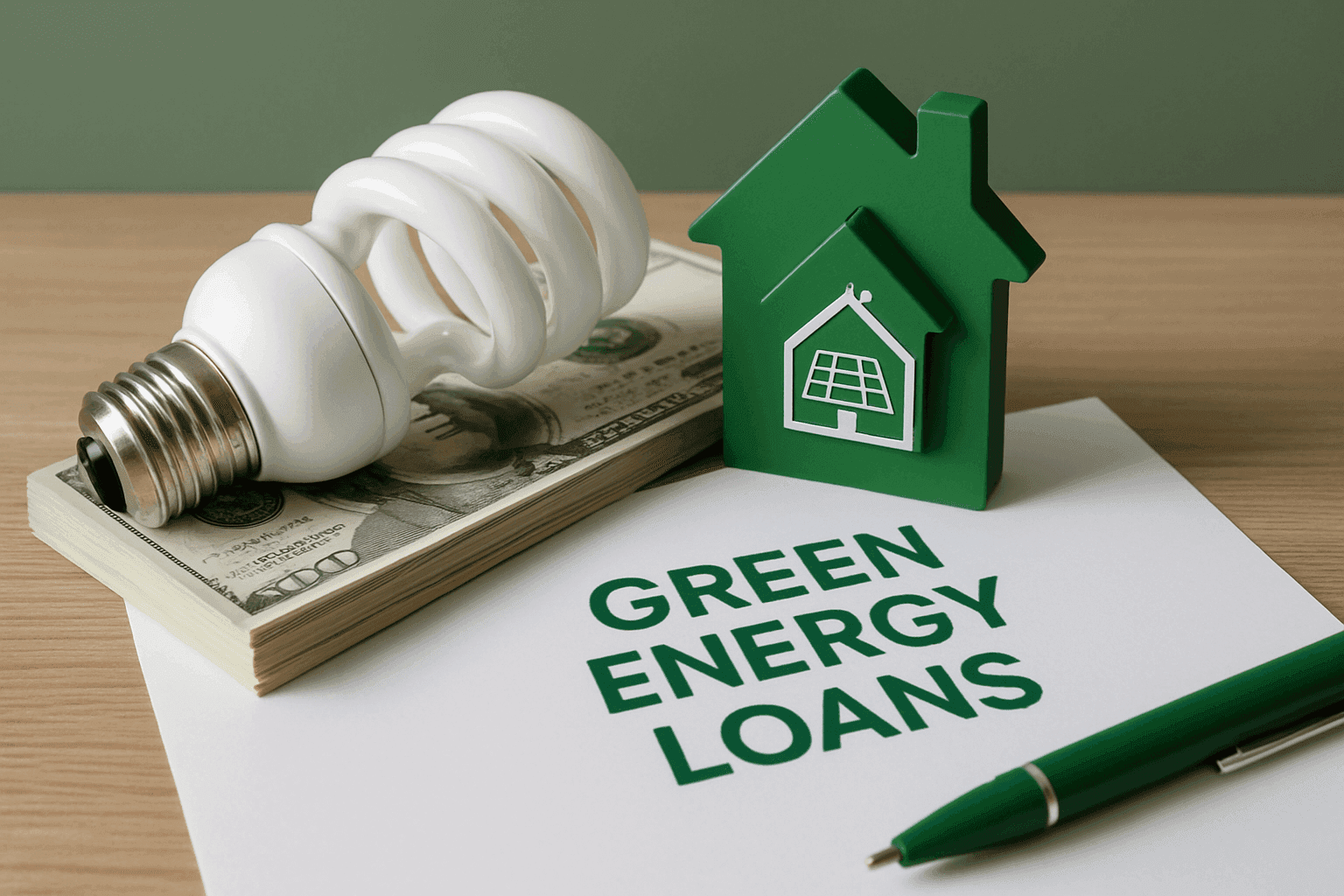
Businesses across the U.S. face rising pressure to reduce carbon footprints, lower energy costs, and meet customer or regulatory expectations for sustainability. Yet financing energy-efficient upgrades, EV fleets, solar installations, or clean heating systems often creates a funding gap. This comprehensive guide explains Green / Clean Energy Loans for U.S. businesses — what they are, common structures, eligibility factors, incentives, and practical application tips to help you evaluate funding options.
Why Green / Clean Energy Loans Matter for U.S. Businesses
Energy projects can deliver operational savings, protect against utility price volatility, and improve brand value. However, upfront capital costs are a common barrier. Green / Clean Energy Loans bridge that gap by providing targeted financing for projects that reduce energy consumption or use renewable resources.
Investing in clean energy can unlock long-term savings and resilience — financing helps align short-term budgets with long-term returns.
Who benefits from these loans?
- Small and medium-sized businesses upgrading lighting, HVAC, or refrigeration systems
- Manufacturers installing energy-efficient process equipment
- Commercial property owners adding solar, battery storage, or EV charging
- Fleet operators switching to electric vehicles
Common Types of Green / Clean Energy Loans
Green funding comes in several forms. Below are the loan structures U.S. businesses commonly use when financing clean-energy projects:
1. Term Loans
Traditional bank-style term loans provide a lump sum repaid over a fixed period with interest. They are often used for larger capital projects such as rooftop solar, combined heat and power (CHP) systems, or major equipment upgrades.
2. Equipment Financing
Equipment financing secures the loan with the asset being purchased — common for solar arrays, EV chargers, or efficient manufacturing equipment. This often preserves working capital and may offer competitive rates.
3. Energy Service Agreements and Performance Contracting (ESCOs)
While not strictly a loan, energy service models allow businesses to pay for energy upgrades over time from the savings realized. ESCOs assume performance risk and the projects are often financed by third parties.
4. Commercial PACE (Property Assessed Clean Energy)
PACE financing is repaid via property tax assessments and is available in many U.S. jurisdictions for energy improvements and resilience measures for commercial properties.
5. SBA Loans and Government-Backed Options
SBA loans (for example, SBA 7(a) or SBA 504) can finance energy-efficient retrofits and new equipment. While not exclusively green, they are a viable option for businesses seeking favorable term structures. See general SBA loan information: SBA.
6. Short-Term Loans & Lines of Credit
Short-term online loans or business lines of credit can bridge cash flow while waiting for incentives or tax credits to arrive. These are flexible but may have higher costs for extended use. See options like Short-Term Online Loan and Business Line of Credit.
Key Funding Sources and Programs
U.S. businesses can combine private commercial financing with public incentives to reduce net costs. Below are principal sources to explore.
Federal and State Incentives
- Investment Tax Credit (ITC) for solar and some energy technologies (federal) — consult the U.S. Department of Energy and IRS guidance for applicability.
- Production tax credits and state-level rebates, which vary by state and project type.
- Grants or low-interest loans from state energy offices or public utility programs.
Commercial Lenders and Community Banks
Many banks and credit unions offer green loan products or incorporate sustainability criteria into commercial lending. Community banks often have local knowledge of available state incentives.
Green Bonds and Institutional Capital
Larger organizations may access institutional capital through green bonds or syndicated loans with sustainability-linked pricing tied to performance metrics.
Utility and On-Bill Financing
Some utilities provide financing repaid on the utility bill (on-bill repayment), which can align payments with energy savings.
Eligibility Factors Lenders Typically Consider
Understanding what lenders evaluate helps businesses prepare stronger applications. Lenders assess project viability and borrower creditworthiness. Common factors include:
- Credit history and business financial statements
- Project cash flow and energy savings projections
- Equipment vendor reputation and warranties
- Collateral and loan-to-value on financed assets
- Permits, interconnection agreements, and expected timelines
- Available incentives and tax credits that affect payback
Quantifying Energy Savings and ROI
Detailed energy audits or third-party engineering reports increase lender confidence. Typical documentation includes:
- Baseline energy usage and proposed savings
- Estimated utility bill reductions and payback period
- Maintenance plans and residual equipment value
How to Prepare a Competitive Application
Preparation improves the likelihood of favorable loan terms and a smoother process. Follow these actionable steps:
- Gather historical financials: profit and loss (3 years if available), balance sheet, cash flow statements.
- Compile project documentation: proposals, warranties, equipment specs, and contractor qualifications.
- Create an energy-savings model: show baseline consumption, expected savings, and payback scenarios.
- Identify incentives: federal tax credits, state rebates, utility programs, and local grants that reduce net project cost.
- Prepare environmental permits and property documents for commercial PACE if applicable.
- Decide on preferred financing structure (term loan vs. equipment financing vs. PACE) and justify choice in the proposal.
Documentation Checklist
- Business tax returns and financial statements
- Project proposals and contractor agreements
- Energy audit or engineering report
- Proof of ownership or leasehold interest (for PACE or property-backed loans)
- List of incentives and tax credit documentation
Practical Examples: How Businesses Use Green / Clean Energy Loans
Real-world examples help illustrate how different loan types map to project needs.
Example 1: Roofing Solar for a Retail Chain
A regional retail chain finances rooftop solar across three locations using equipment financing and an investment tax credit to reduce net cost. Equipment financing covers installation costs; projected energy savings shorten the payback to 5–7 years.
Example 2: Manufacturer Replaces Compressed Air System
A manufacturing facility replaces an inefficient compressed air system with an energy-efficient compressor and heat recovery unit. The business uses a term loan and an energy-efficiency rebate from the local utility. Energy audits quantify savings used in the loan model.
Example 3: Office Building Adds EV Chargers
Commercial property owner installs Level 2 EV chargers using commercial PACE financing that attaches repayment to the property tax bill. The property owner estimates improved tenant retention and rents to justify the investment.
Costs, Rates, and Typical Loan Terms
Rates depend on the financing structure, borrower credit profile, collateral, and the loan’s length. Typical ranges (illustrative):
- Bank term loans: variable depending on prime plus margin; often competitive for creditworthy borrowers
- Equipment financing: mid-single-digit to low double-digit APRs depending on asset and borrower
- Commercial PACE: rates vary by jurisdiction and program structure
- SBA loans: often lower rates and longer terms but with stricter documentation requirements
Include contingency in your financial model for maintenance, repair, and lower-than-expected performance — lenders will expect conservative assumptions.
Tax Treatment and Regulatory Considerations
Federal tax policy affects project economics. For example, the federal Investment Tax Credit (ITC) can materially reduce after-tax costs for solar and certain clean technologies. Consult tax professionals for business-specific implications and review authoritative guidance at the IRS and U.S. Department of Energy.
Common Pitfalls and Risk Management
Understanding pitfalls reduces delays and helps manage lender expectations:
- Overstating energy savings — use third-party verification when possible
- Ignoring permitting or interconnection timelines — these can delay cash flows
- Failing to account for maintenance or warranty expiration costs
- Not coordinating incentives with financing — some incentives require documentation or pre-approval
Mitigating Risk
- Engage reputable installers with performance guarantees
- Secure pre-qualification from utilities for interconnection
- Include reasonable contingencies in the budget and schedule
- Consider third-party verification of savings after installation
Expert Tips for U.S. Businesses Seeking Green Financing
- Start with an energy audit: lenders and incentive programs often require baseline metrics.
- Layer incentives: combine federal tax credits, state rebates, and utility programs to lower loan amounts.
- Prepare multiple financing scenarios: compare total cost of ownership across lending options.
- Document warranties and maintenance plans to reduce perceived operational risk.
- Involve your tax advisor early to understand how credits and depreciation affect cash flow.
Where to Learn More and Useful Links
- Department of Energy - Office of Energy Efficiency & Renewable Energy: energy.gov/eere
- Investopedia overview on green bonds and sustainable finance: Investopedia - Green Bonds
- SBA information on loan programs: sba.gov
- EPA resources on energy efficiency and financing: epa.gov/energy
For related product or page information, consider these internal resources:
Checklist: Is Green / Clean Energy Financing Right for Your Project?
- Projected energy savings exceed incremental financing costs
- Eligible for meaningful incentives or tax credits
- Equipment vendors offer warranties and proven performance
- Permitting and interconnection timelines are manageable
- Business financials support the repayment schedule
Frequently Asked Questions (FAQ)
What are Green / Clean Energy Loans?
Green / Clean Energy Loans are financing options structured to fund energy-efficient upgrades or renewable energy projects for commercial entities. They include term loans, equipment financing, PACE, and other structures tailored to clean-energy investments.
Can small businesses qualify for green financing?
Yes. Small businesses can qualify for green financing if they demonstrate project viability, acceptable financials, and often an energy audit. Options include equipment loans, SBA programs, and local utility or state incentives.
What incentives reduce the cost of green projects?
Incentives include federal tax credits (such as the Investment Tax Credit for solar), state rebates, utility programs, and grants. Incentive availability varies by technology and location; consult federal and state resources for current programs.
How do lenders verify projected energy savings?
Lenders typically request energy audits, engineering reports, vendor performance data, and sometimes third-party measurement and verification (M&V) to substantiate savings used in financial models.
Is PACE financing available everywhere in the U.S.?
No. Commercial PACE programs are available in many states and local jurisdictions but not universally. Availability and program terms differ by location.
What loan term lengths are typical for clean energy projects?
Terms vary by structure and asset life: equipment financing may match asset life (5–15 years), term loans can run longer depending on collateral, and PACE repayments match the assessment period, which can extend beyond 20 years in some cases.
Do lenders require collateral for green loans?
Collateral requirements depend on the lender and loan type. Equipment financing often uses the equipment as collateral. Term loans may require business assets or personal guarantees depending on creditworthiness.
Conclusion
Green / Clean Energy Loans present a practical path for U.S. businesses to finance energy efficiency and renewable projects that offer cost savings, regulatory alignment, and improved sustainability credentials. By preparing strong documentation, understanding incentives, and comparing financing structures, companies can make informed decisions that align with business goals.
Explore funding options available in the market, review how different financing structures work, and gather the documentation lenders commonly consider. For more details about specific loan types and to compare general features, visit our product pages like Green / Clean Energy Loans or read related funding guides such as Term Loan for Small Business. If you’re ready to evaluate options, get a quote or contact a finance advisor to discuss next steps and learn how lenders may typically consider your project.